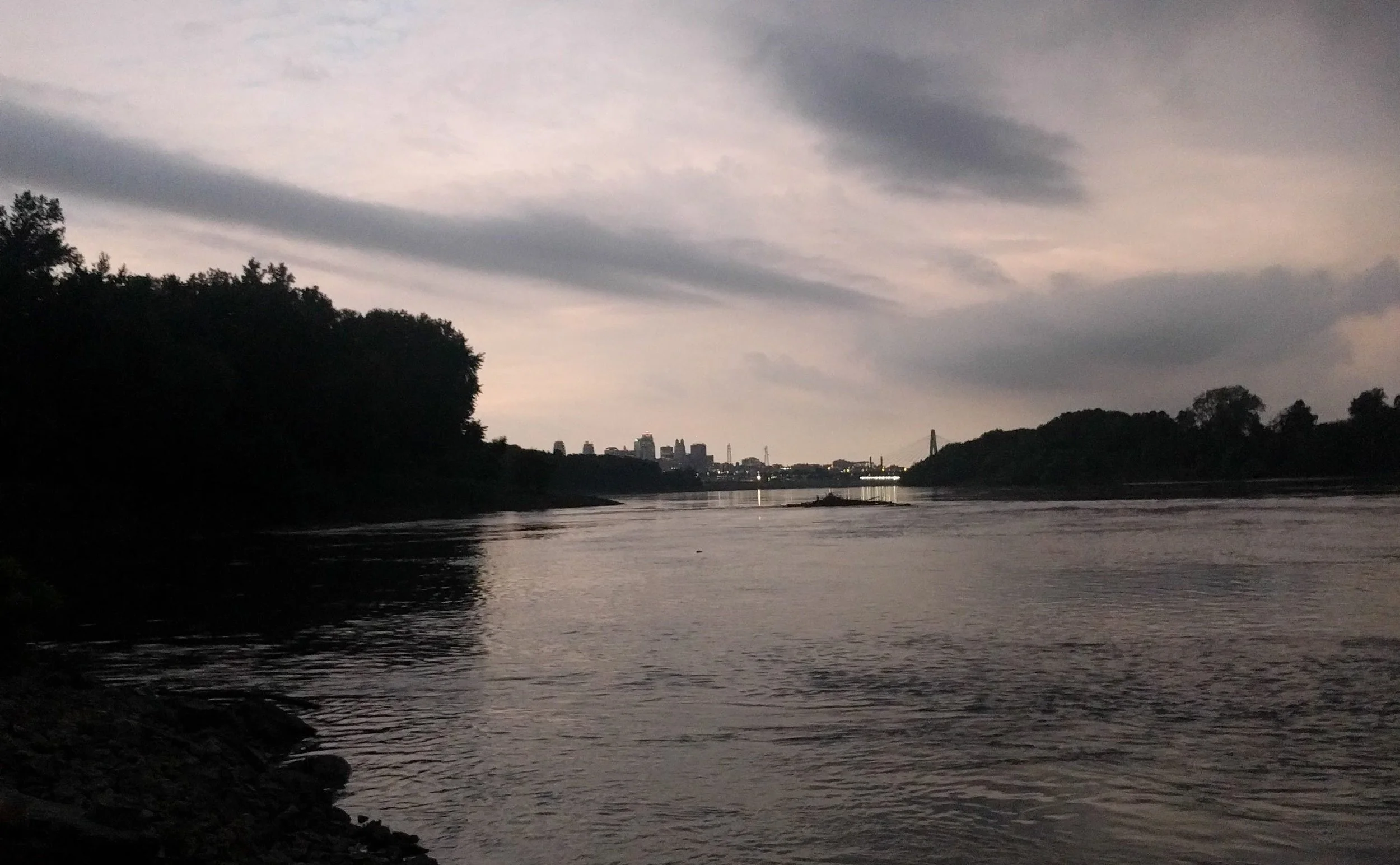
My car was full of moving boxes when darkness fell on Kansas City. It was August 21st, 2017 and eclipse mania took over the city. I watched the moon block out the hot afternoon sun on the south bank of the Missouri River. I sat among the river debris at Riverside Park with downtown KC in the distance. As the world went dark, the river kept flowing. Fish jumped, owls hooted, day became night. The river didn’t change. Water from across the Great Plains rushed by on its way to the ocean.
Every other good viewing spot in the city was packed, but, I was alone. Riverside Park is east of downtown and a bit off the beaten path but the river was empty. No people, no boats, and sadly no big fish. It was eerily silent in a metro of over two million people. The 15 minute drive downtown may as well have taken two hours. After nine years in KC, I’m no longer surprised. Much like the rest of the Great Plains, the Missouri River is often overlooked. I moved here in part so I could study the river up close. I hope I can adequately share its story to the world. This article is brief introduction to Kansas City and the Missouri.
In the 18th-century, French explores prized the land which became Kansas City for its fur. Beaver and otters frolicked in the Kansas and Missouri river bottoms. Their pelts created empire and drove European fashion. In the 19th-century, the Lewis and Clark Expedition popularized going west. Kansas City slowly morphed from a remote river out post into the largest city on America’s longest river.
The Big Muddy as it is sometimes called starts its journey at Three Forks, Montana. The Gallatin, Jefferson, and Madison rivers come together to form the spine of the Great Plains. Meriwether Lewis named the rivers (replacing their indigenous names) for President Thomas Jefferson, Secretary of State and future president James Madison, and Jefferson’s Treasury Secretary Albert Gallatin. From Three Forks, the Mighty Mo flows about 2,500 miles southeast until it joins the Mississippi at St. Louis, Missouri. Standing alone, it is one of the top 15 longest rivers in the world. Combined with the Mississippi, they are the third longest. Only the Nile and Amazon are longer. The Mighty Mo was and remains a living character on the prairies. Everyone on the Plains had to deal with Old Man River.
The Big River controlled nearly all aspects of life in the middle of North America. Native tribes fished, lived, and traveled on the river for thousands of years. The river valley was shelter during the sweltering summer heat and protected people and big game animals like deer, bison, and elk from hollowing winter winds. In the first half of the 19th century, the river was a highway for Americans. Stanley Vestal wrote in his 1945 book Rivers of America the Missouri that “for them [pioneers] that river, that highway, meant cold and wet and violent storms, beating hail and caving banks, snags, and rapids and wrecked boats, an avalanche of high water sweeping all before it.”[1] That highway fell nearly silent when the railroads arrived after the Civil War. The train steamed into town in 1865. The party really started four years later when the Hannibal Bridge opened. It was the first permeant rail bridge over the Missouri River. Kansas City the river town died and Kansas City the train town was born. The transformation altered the cities relation to the river.
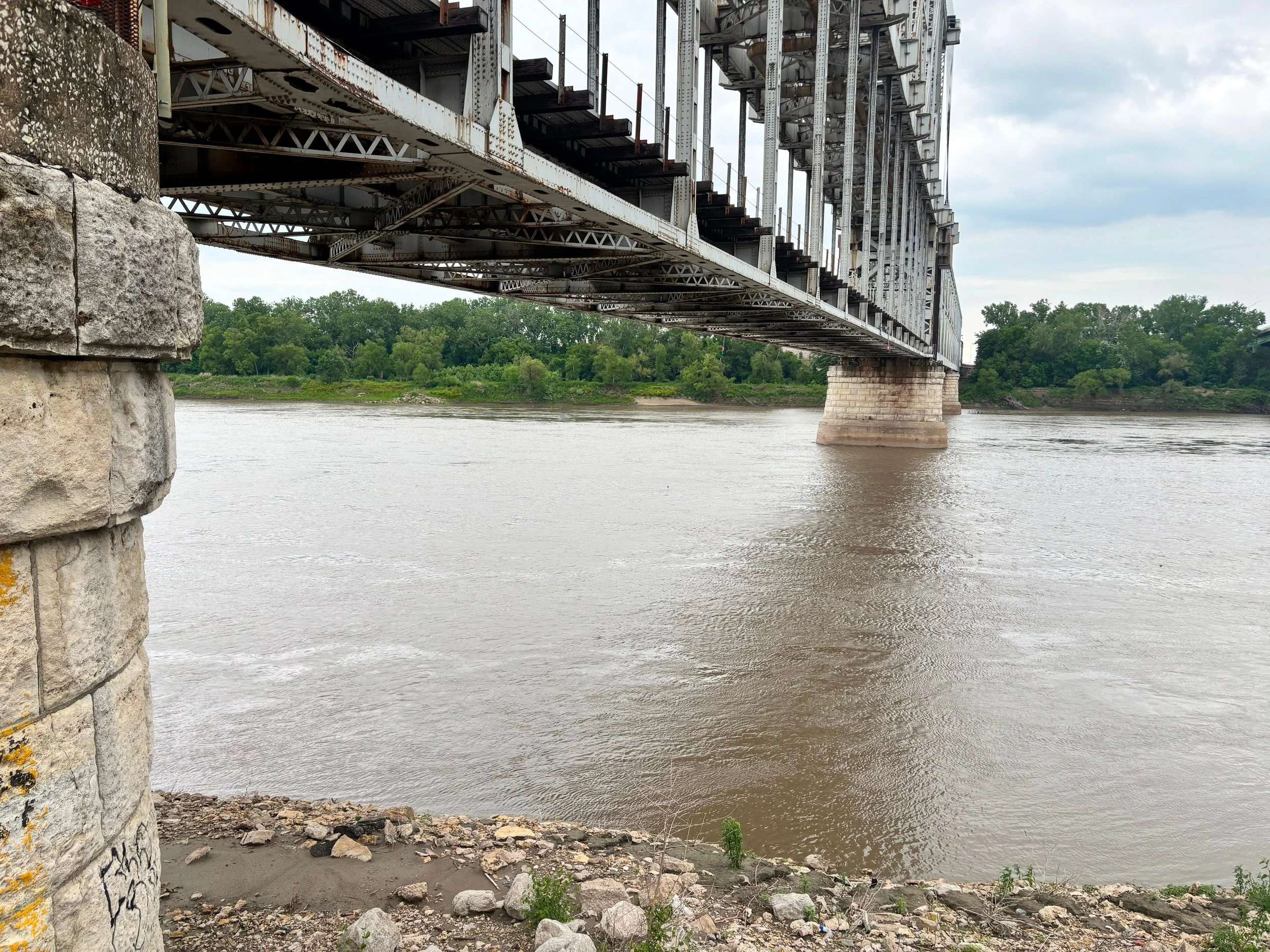
The Missouri River under the ASB Railroad Bridge a mile or so down river from the Hannible Bridge. Construction started on the ASB in 1890 and it opened in 1911. Photo taken by me
As more and more people and goods came and went on the rails, the river fell silent. The steamboats and wharfs slowly disappeared. By the 1890s, steamboat traffic on the river was basically gone.[2] Commercial fishing held on a bit longer but that slowly petered out in by the middle of the 20th-century. The once mighty Missouri became a dumping ground for the cities’ waste and something to be afraid of. People were terrified (justifiably so) of annual flooding. Events like the Great Floods of 1951 and 1993 are etched into KC’s history. The 51 flood did an estimated one billion dollars’ worth of damage and killed 17 people. The local KC PBS station called 1993 “Kansas City’s Cruel Summer” because of the flooding. Dams and levees were built up and down the Missouri River to control the floods. The river we see today is the result of those efforts. As the human use of the river changed, one thing remained, our ancient giants.
Paddlefish, sturgeon, and gar all shared North America’s waters with dinosaurs. The best fossil records we have indicate they are all about 125 to 300 million years old. The modern Missouri formed about 100,000 years ago so it’s most famous residents are significantly older than their home. The historic Missouri was perfect for these fish. They all need big, slow moving, deep rivers. It’s no wonder their population dropped after the dams closed. The 21st-century river is a fast flowing nightmare. Sandbars like the one Bill Hadley, Charlie Collins, Bert Hadley, and Denver Vaught camped on beneath the Hannibal Bridge in the shadow of downtown Kansas City in August, 1910 get swept away as soon as the first grain of sand settles on the bank. Back then, the river still supported a viable commercial fishery.
The fishing day started early the sun was just peaking over the river. While the rest of KC slept, our fisherman were working at 6 am to interrupt the morning paddlefish run. It took all four men to wrangle the 250 foot net. Paddlefish can grow up to seven feet long and weigh almost 200 pounds so they needed every inch of that net. A Kansas City Star writer described the men as “barefoot, dressed in jumpers and overalls, active wiry men, and quiet.” They deployed the net but rowing 200 feet upstream and secures it to the bank. Then, they rowed out to the middle of the river to unfurl the net. After that, the real work began. It took all four men to haul in the net’s lead rope. They could make three attempts an hour and worked nine to 10 hours a day. The Star noted that they weren’t successful very often (those pesky fish knew how to stay away from the net!) but when they were, the men caught up to a dozen fish per attempt. They averaged 200 pounds of fish per day and the local markets paid “five cents a pound for carp, seven cents a pound for ‘yellow’ cats, and eight cents a pound for ‘spoon bill’ cat [paddlefish].”[3] Fisherman would catch 15 to 20 paddlefish per haul.[4] There weren’t many of them, but commercial fisherman could make an honest living here. Nowadays, the nets would be swept away in the never ending riptide before a paddlefish could come within a mile of the fisherman.
Over the last nine years KC has started rebuilding the connection to the Missouri. The Kansas City Current spurred development along the waterfront and in 2026, an old railway bridge over the Kansas River just upstream was repurposed into an entertainment district. There are even ongoing efforts to re-introduce paddlefish to the Missouri River section here in KC.[5] For too long, Kansas City was a river town that forgot its river. I’m hopeful we’re on the cusp of fixing that. I want this city to be an example for every river city in this country about how they can reconnect with their local waterway. Kansas Citains were a major driver of damming the Missouri in the 19th and 20th centuries. Maybe we can start mitigating those harms in the 21st. It all starts with what swims in our midst.
[1] Rivers of America the Missouri, Stanley Vestal, 1945, pg 7.
[2] https://history.nebraska.gov/steamboats-impractical-in-an-age-of-railroads/
[3] River Fishing for a Living, Kansas City Star, 08/21/1910.
[4] Fish are More Plentiful in the Missouri Seiners Make Larger Catches Each Year, Kansas City Star, 03/28/1909.
[5] https://www.kcur.org/podcast/up-to-date/2025-06-06/american-paddlefish-kansas-city-sea-life-aquarium
Sed purus sem, scelerisque ac rhoncus eget, porttitor nec odio. Lorem ipsum dolor sit amet.